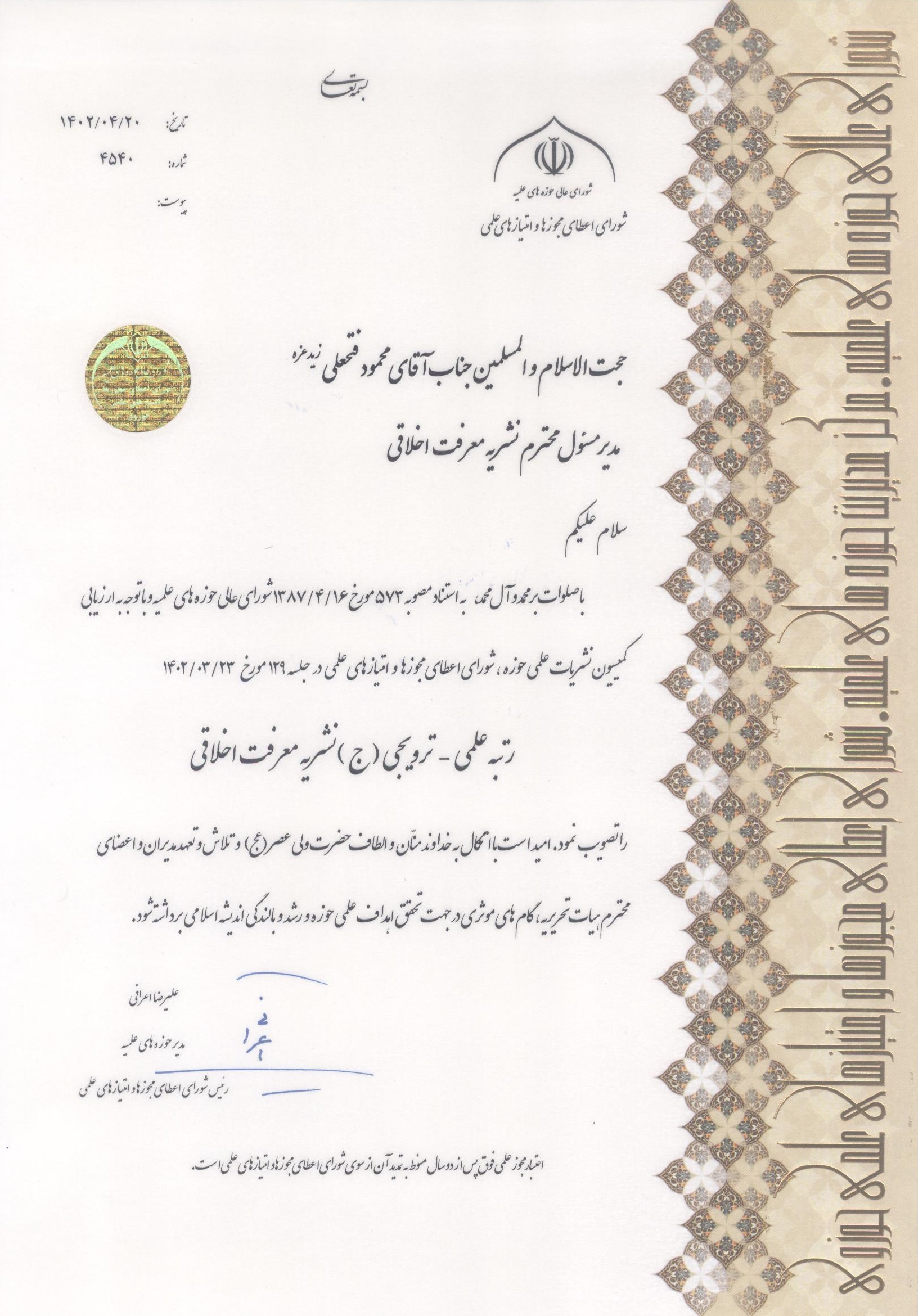
This article will be published in future issues of Ma`rifat-i Akhlaqi.
Comparative Analysis of the Sources and Foundations of Moral Motivation in the Thought of Allameh Misbah Yazdi and Abraham Maslow
Article Type:
Promotional
Writers:
✍️ Mohammad javad Hamzepoor / دانشجوی دکترا موسسه آموزشی پژوهشی امام خمینی / mohammadjavadhamzepoor68@gmail.com
/ دانشجوی دکترا موسسه آموزشی پژوهشی امام خمینی / mohammadjavadhamzepoor68@gmail.com10.22034/marefateakhlagi.2026.5003076⏳
Abstract:
Moral motivation is a fundamental element in explaining ethical behavior, and understanding its sources and foundations can contribute to the development of ethical and educational models. This study aims to analyze and comparatively examine the sources and structure of moral motivation within two distinct intellectual frameworks: Allameh Misbah Yazdi’s Islamic moral philosophy and Abraham Maslow’s humanistic psychology. Using deductive content analysis and document-based research, the primary works of both thinkers were extracted, coded, and compared. The findings indicate that, in Misbah’s view, moral motivation is rooted in human nature (fitrah), a theistic worldview, and the innate inclination toward perfection and nearness to God; and it is structured through the interaction of cognition, inclination, and will. In contrast, Maslow understands moral motivation as an outcome of hierarchical human needs and the emergence of Being-values within the process of self-actualization. The comparative analysis reveals that although both perspectives emphasize the internal nature of moral motivation, they differ fundamentally in their anthropological assumptions, motivational sources, and ultimate moral goals.
چکیده و کلیدواژه فارسی (Persian)
Title :مقایسهٔ تطبیقی منابع و مبانی انگیزش اخلاقی در اندیشهٔ علامه مصباح یزدی و آبراهام مزلو
Abstract:
انگیزش اخلاقی یکی از عناصر بنیادین در تبیین رفتار اخلاقی انسان است و فهم منابع و مبانی آن میتواند به توسعه الگوهای تربیتی و اخلاقی کمک کند. پژوهش حاضر با هدف تحلیل و مقایسهٔ تطبیقی منابع و ساختار انگیزش اخلاقی در دو منظومهٔ فکری متفاوت—فلسفهٔ اخلاق اسلامیِ علامه مصباح یزدی و روانشناسی انسانگرای آبراهام مزلو—انجام شده است. این مطالعه با روش تحلیل محتوای استنتاجی و بر پایه تحلیل اسنادی، آثار اصلی این دو اندیشمند را استخراج، کدگذاری و مقایسه کرده است. یافتهها نشان میدهد که در اندیشهٔ مصباح، انگیزش اخلاقی ریشه در فطرت، جهانبینی الهی، و میل انسان به کمال و قرب الهی دارد و تعامل سه مؤلفهٔ شناخت، گرایش و اراده ساختار اصلی آن را تشکیل میدهد. در مقابل، مزلو انگیزش اخلاقی را نتیجهٔ نیازهای سلسلهمراتبی و ارزشهای هستی در فرایند خودشکوفایی میداند. مقایسهٔ دو دیدگاه نشان میدهد که هرچند هر دو نظریه بر درونیبودن انگیزش اخلاقی تأکید دارند، اما در مبانی انسانشناختی، منابع انگیزش و غایت اخلاقی تفاوتهای بنیادین میان آنها وجود دارد.
Cite this article:
RIS
Mendeley
BibTeX
APA
MLA
HARVARD
VANCOUVER
Hamzepoor, Mohammad javad, Fallah, Hadi. (2026) Comparative Analysis of the Sources and Foundations of Moral Motivation in the Thought of Allameh Misbah Yazdi and Abraham Maslow. Ma`rifat-i Akhlaqi, (), - https://doi.org/10.22034/marefateakhlagi.2026.5003076.
Mohammad javad Hamzepoor; Hadi Fallah."Comparative Analysis of the Sources and Foundations of Moral Motivation in the Thought of Allameh Misbah Yazdi and Abraham Maslow". Ma`rifat-i Akhlaqi, , , 2026, -
Hamzepoor, M, Fallah, H.(2026) 'Comparative Analysis of the Sources and Foundations of Moral Motivation in the Thought of Allameh Misbah Yazdi and Abraham Maslow', Ma`rifat-i Akhlaqi, (), pp. -